
Uganda travel guide; Uganda is one of Africa’s most extraordinary and most underrated travel destinations. Known as the Pearl of Africa — a name that perfectly captures the country’s extraordinary biodiversity dramatic landscapes and warm welcoming people — Uganda packs more wildlife diversity cultural richness and natural beauty into its borders than almost any other country on the continent.
This complete Uganda travel guide covers everything you need to know before you go — visa requirements safety health money transport best time to visit top attractions where to stay what to eat and the insider tips that make the difference between a good Uganda trip and an extraordinary one.
Whether you are planning gorilla trekking in Bwindi chimpanzee trekking in Kibale a Big Five game drive in Queen Elizabeth National Park or a complete Uganda safari circuit this Uganda travel guide has everything you need to plan your perfect trip.
Uganda at a Glance
| Official name | Republic of Uganda |
| Capital | Kampala |
| Population | Approximately 48.5 million |
| Area | 241,038 km² |
| Official languages | English · Swahili · Luganda + 40 indigenous languages |
| Currency | Ugandan Shilling (UGX) |
| Time zone | EAT — East Africa Time (UTC+3) |
| International dialling code | +256 |
| Electricity | 240V — British three-pin plugs |
| Main airport | Entebbe International Airport (EBB) |
| President | Yoweri Museveni |
| Religion | Predominantly Christian with significant Muslim minority |
| Known for | Mountain gorillas · chimpanzees · Nile · Rwenzori Mountains |
Why Visit Uganda in 2026 travel guide
Uganda offers international travellers a genuinely rare combination of extraordinary wildlife cultural richness and authentic Africa that is becoming increasingly hard to find elsewhere on the continent:
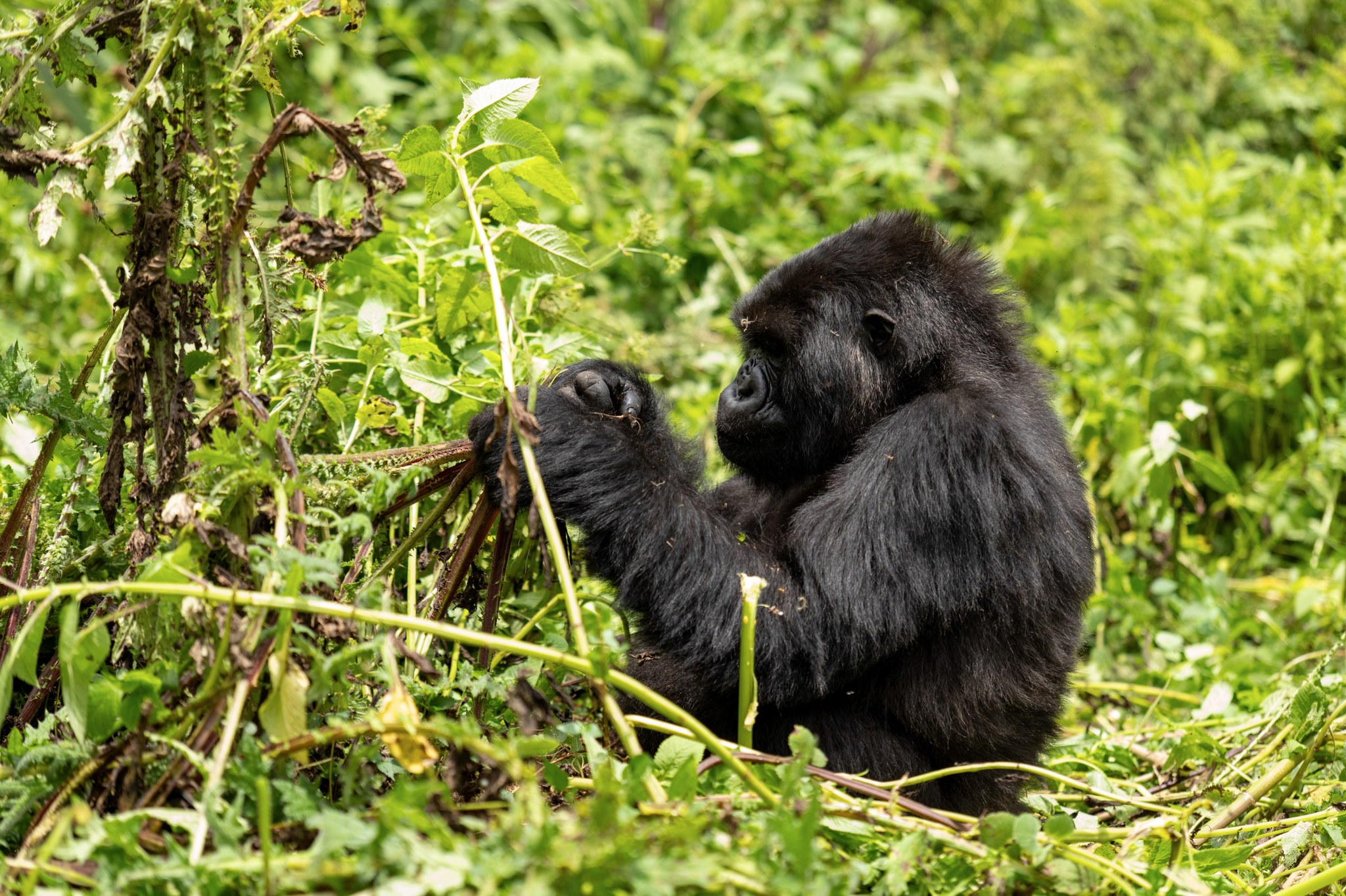
Mountain gorilla trekking — Uganda’s Bwindi Impenetrable Forest is home to nearly half the world’s mountain gorilla population. With 19 habituated gorilla families and permits at $800 — $700 cheaper than Rwanda — Uganda is the most accessible and affordable gorilla trekking destination on Earth. Read our complete Bwindi Impenetrable Forest guide and Uganda gorilla permit guide.
Chimpanzee trekking — Kibale Forest National Park has the highest chimpanzee density in East Africa — approximately 1,500 individuals. The best chimpanzee trekking experience in Africa. Read our complete Kibale Forest chimpanzee guide.
Extraordinary biodiversity — Uganda has over 1,000 bird species (more than the entire North American continent) 13 primate species tree-climbing lions in Queen Elizabeth and the most powerful waterfall on Earth at Murchison Falls.
Authentic and uncrowded — Uganda receives far fewer tourists than Kenya or Tanzania — meaning more exclusive wildlife encounters less crowded parks and a rawer more authentic Africa.
Remarkable accessibility from Rwanda — Kigali to Bwindi is just 2–3 hours by road via the Cyanika border crossing — making Uganda the perfect addition to a Rwanda gorilla trekking safari. Read our gorilla trekking Rwanda vs Uganda guide.
The source of the Nile — the Nile River begins its 6,650 km journey to the Mediterranean at Jinja in eastern Uganda — one of Africa’s most historically significant geographical landmarks.
Uganda travel guide: Visa Information 2026
Who Needs a Visa?
Most nationalities require a visa to enter Uganda. Exceptions include citizens of some East African Community member states. Always check current requirements before travel as these change periodically.
Uganda E-Visa
Uganda’s e-visa system allows most nationalities to apply online before travel:
Uganda e-visa details:
- Cost: $50 USD for a single entry tourist visa
- Processing time: 3–5 business days
- Validity: 90 days from entry
- Application: Through the Uganda e-immigration portal
Apply at least 2 weeks before travel to allow processing time.
East African Tourist Visa — Best Value for Multi-Country Travel
If your Uganda travel guide itinerary includes Rwanda and Kenya the East African Tourist Visa is outstanding value:
- Cost: $100 USD — covers Uganda Rwanda and Kenya
- Entry: Multiple entries across all three countries
- Validity: 90 days
- Application: Through any of the three countries’ immigration portals
For most international travellers combining Uganda gorilla trekking with Rwanda this is by far the best visa option. Read our gorilla trekking Rwanda vs Uganda guide for multi-country itinerary ideas.
Uganda-Rwanda Border Crossings
The main border crossings used by tourists combining Uganda and Rwanda:
Katuna/Gatuna — most commonly used crossing — connects Uganda’s southwest with Rwanda’s northern regions including Kigali. Open 24 hours.
Cyanika — connects Uganda’s Kisoro District (near Bwindi) directly with Rwanda’s Musanze District (near Volcanoes National Park). Just 30 minutes from the Rwanda gorilla trekking area. Excellent for combined gorilla safaris.
Uganda Safety Guide 2026
Uganda is a stable and safe country for international tourists — particularly in the main tourist areas of Kampala Entebbe the western safari circuit and the national parks.
General Safety
Kampala and Entebbe: Generally safe but exercise standard urban precautions — be aware of your surroundings in crowded areas keep valuables secure and avoid poorly lit areas late at night. Boda-boda motorcycle taxis are convenient but use reputable operators.
National parks and safari areas: All Uganda national parks have excellent ranger presence and professional management. Wildlife encounters are completely safe when conducted with professional guides. Game drives and gorilla treks are led by experienced armed rangers.
Western Uganda (safari circuit): The areas around Bwindi Kibale Queen Elizabeth and Murchison Falls are completely safe and receive thousands of international visitors every year.
Northeastern Uganda (Karamoja region): This remote region has historically had security challenges — check current travel advisories before visiting Kidepo Valley National Park which requires a domestic flight from Entebbe.
For Women Travelling Alone
Uganda is generally a welcoming country for solo female travellers. In tourist areas and national parks harassment is rare. Standard travel awareness applies as with any international destination. Read our solo gorilla trekking Rwanda guide — the same solo travel principles apply to Uganda.
Emergency Contacts in Uganda
- Police: 999 or 112
- Ambulance: 999
- Uganda Tourism Hotline: +256 414 342 196
- Go Safaris Africa 24/7: +250 788 365 595
Best Time to Visit Uganda
Uganda can be visited year-round — gorillas chimpanzees and most wildlife are present every day regardless of weather. However seasons significantly affect trail conditions wildlife viewing and value for money.
Long Dry Season — June to September ⭐⭐⭐⭐⭐
The best time in this Uganda travel guide for gorilla trekking and all outdoor activities. Dry trails excellent photography comfortable temperatures. Peak tourist season — book gorilla permits and accommodation 6–9 months in advance.
Short Dry Season — December to February ⭐⭐⭐⭐
Excellent conditions with better permit availability than peak season. January and February are particularly recommended — good weather fewer tourists and lower lodge rates. One of the most underrated periods for Uganda travel.
Long Rainy Season — March to May ⭐⭐⭐
Heavy daily rainfall makes gorilla trekking trails muddier and more challenging. Beautiful lush scenery. Lodge rates drop 20–30%. Gorilla trekking still fully operational — gorillas are found year-round.
Short Rainy Season — October to November ⭐⭐⭐
Similar to March–May. October is Uganda’s best month for birding — migrants arrive from Europe and Asia. Lodge rates lower than peak season.
For a complete month-by-month seasonal guide read our best time to visit Rwanda for gorilla trekking — Uganda’s seasons follow virtually identical patterns.
Getting to Uganda
International Flights to Entebbe
Entebbe International Airport (EBB) is Uganda’s only international airport — located on the shores of Lake Victoria 40 km south of Kampala.
Direct or one-stop flights from:
- London: British Airways and Uganda Airlines (approximately 9 hours direct)
- Amsterdam: KLM via Nairobi
- Brussels: Brussels Airlines
- Dubai: Emirates (one of the most popular routes)
- Nairobi: Kenya Airways Ethiopian Airlines (1 hour)
- Addis Ababa: Ethiopian Airlines (2 hours)
- Kigali: RwandAir (45 minutes) — perfect for combined Rwanda-Uganda safaris
- Johannesburg: Multiple carriers (3–4 hours)
Overland Entry to Uganda
Uganda shares borders with Kenya Tanzania Rwanda DRC and South Sudan. The most commonly used tourist border crossings:
From Rwanda: Katuna/Gatuna (most used) and Cyanika (best for Bwindi access) From Kenya: Malaba and Busia (western Kenya to eastern Uganda) From Tanzania: Mutukula (southern Uganda)
Getting Around Uganda
Uganda’s tourist circuit covers significant distances — understanding transport options is one of the most important sections of this Uganda travel guide.
Private Safari Vehicle with Driver-Guide (Recommended)
For all safari activities the best option is a private 4×4 safari vehicle with an experienced driver-guide. Go Safaris Africa provides well-maintained Toyota Land Cruisers and experienced guides for all Uganda safari itineraries.
Key distances and drive times:
- Kampala to Bwindi (Buhoma): 8–10 hours
- Kampala to Kibale Forest: 5–6 hours
- Kampala to Queen Elizabeth NP: 5–6 hours
- Kampala to Murchison Falls: 4–5 hours
- Kampala to Lake Mburo: 3 hours
- Kampala to Kidepo Valley: 10–12 hours (or domestic flight)
Domestic Flights (Strongly Recommended for Bwindi)
Domestic flights dramatically reduce travel time and make Uganda’s safari circuit far more comfortable:
- Entebbe → Kihihi airstrip (Bwindi Buhoma/Ruhija): 45 minutes
- Entebbe → Kisoro airstrip (Bwindi Nkuringo/Rushaga): 45 minutes
- Entebbe → Kasese airstrip (Queen Elizabeth NP): 45 minutes
- Entebbe → Pakuba airstrip (Murchison Falls): 45 minutes
- Entebbe → Kidepo airstrip: 1.5 hours
Go Safaris Africa arranges all domestic flight bookings as part of Uganda safari packages.
Public Transport
Uganda has a comprehensive network of shared minibuses (matatus) and long-distance coaches connecting major towns. Good for budget independent travellers on the main routes. Not practical for reaching remote national parks.
Uganda Health Guide
Vaccinations Required and Recommended
Required:
- Yellow fever vaccination — mandatory for all visitors arriving from yellow fever risk countries. Carry your yellow card as proof — you will be checked at the airport.
Strongly recommended:
- Hepatitis A
- Typhoid
- Tetanus and diphtheria
- Meningitis
- Rabies (for longer stays or extensive outdoor activities)
Consult your doctor or travel health clinic at least 4–6 weeks before departure.
Malaria in Uganda
Uganda is a malaria risk country throughout — antimalarial medication is strongly recommended for all travellers visiting any part of Uganda.
Common antimalarial options:
- Malarone: Start 1–2 days before travel take daily stop 7 days after leaving. Fewest side effects.
- Doxycycline: Cheaper than Malarone. May cause sun sensitivity.
- Lariam: Weekly dose. Can cause neurological side effects in some people.
Consult your doctor for the best option for your health profile.
Altitude Considerations
The gorilla trekking areas around Bwindi and Mgahinga sit at 1,600–2,300 metres above sea level. Some travellers experience mild altitude effects. Stay hydrated and ascend gradually where possible.
Medical Facilities
Kampala has reasonable private hospitals — International Hospital Kampala and Nakasero Hospital are the best options for international travellers. Outside Kampala medical facilities are limited. Comprehensive travel insurance with medical evacuation coverage is absolutely essential for Uganda travel.
Gorilla Trekking Health Rule
If you have a cold flu or any respiratory illness you cannot trek with gorillas or chimpanzees. Gorillas and chimps share 98%+ of human DNA and are extremely vulnerable to human diseases. Do not trek if you are unwell — even if you have paid for your permit.
Money and Costs in Uganda
Currency
Uganda uses the Ugandan Shilling (UGX). As of 2026 approximate exchange rates:
- $1 USD = approximately 3,700 UGX
- £1 GBP = approximately 4,700 UGX
- €1 EUR = approximately 4,000 UGX
US Dollars in Uganda
US dollars are widely accepted throughout Uganda for tourism payments — gorilla permits lodge bills and safari packages are all commonly priced and paid in USD. Bring clean undamaged USD bills (post-2006 preferred).
ATMs and Banking
ATMs are readily available in Kampala Entebbe and major towns. Less reliable in remote areas near national parks — withdraw sufficient cash before heading into the field.
Stanbic Bank Centenary Bank and Equity Bank have the most reliable ATM networks. Inform your bank before travel.
Credit Cards
Accepted at most mid-range and luxury hotels in Kampala. Less reliable outside the capital. Always carry USD cash as backup — essential in remote safari areas.
Cost of Travel in Uganda
Uganda is generally good value compared to Kenya and Tanzania:
Budget traveller: $60–$100 per day (guesthouse local restaurants shared transport) — excluding gorilla permit Mid-range traveller: $150–$300 per day (comfortable lodge good restaurant private transport) Luxury traveller: $400–$1,000+ per day (luxury lodge private vehicle fine dining)
The gorilla permit ($800) is the biggest single expense — plan your Uganda budget around this cost first then build everything else around it.
Tipping Culture in Uganda
Tipping is expected and appreciated in Uganda’s tourism sector:
| Suggested Tip | |
|---|---|
| Gorilla trek ranger guide | $20–$30 per trek |
| Porter | $10–$20 per trek |
| Chimp trek ranger guide | $15–$20 per trek |
| Safari driver-guide | $15–$20 per day |
| Lodge staff | $5–$10 per night |
| Restaurant waiter | 10% of bill |
Prepare tips in USD cash in small denomination bills.
Top Attractions in Uganda
1. Bwindi Impenetrable Forest — Mountain Gorilla Trekking
Uganda’s greatest wildlife experience and the reason most international visitors come. Bwindi is home to nearly half the world’s mountain gorilla population — 459 individuals across 50+ gorilla groups with 19 habituated families open to tourism.
👉 Complete Bwindi Impenetrable Forest guide 👉 Uganda gorilla permit 2026 complete guide
2. Kibale Forest National Park — Chimpanzee Trekking
The best chimpanzee trekking destination in Africa — 1,500 chimpanzees in the highest density forest in East Africa plus 13 primate species and 375+ bird species.
👉 Complete chimpanzee trekking Kibale Forest guide
3. Queen Elizabeth National Park — Tree-Climbing Lions
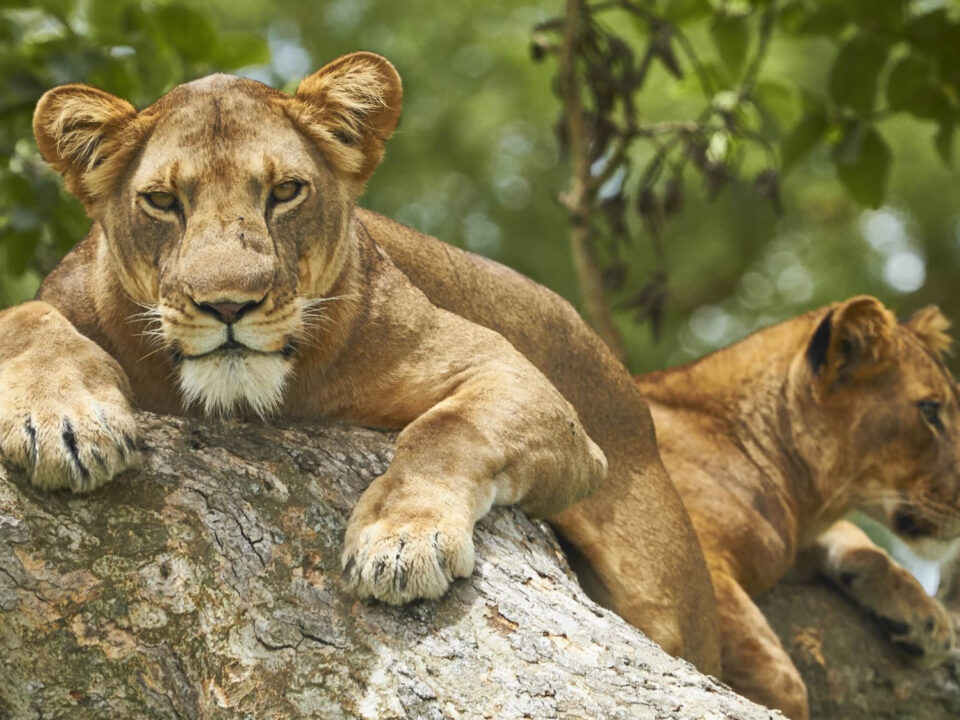
Uganda’s most visited national park — famous for tree-climbing lions in Ishasha sector the extraordinary Kazinga Channel boat safari and 600+ bird species.
“For the complete Queen Elizabeth experience read our Queen Elizabeth National Park 2026 guide.”
4. Murchison Falls National Park — The World’s Most Powerful Waterfall
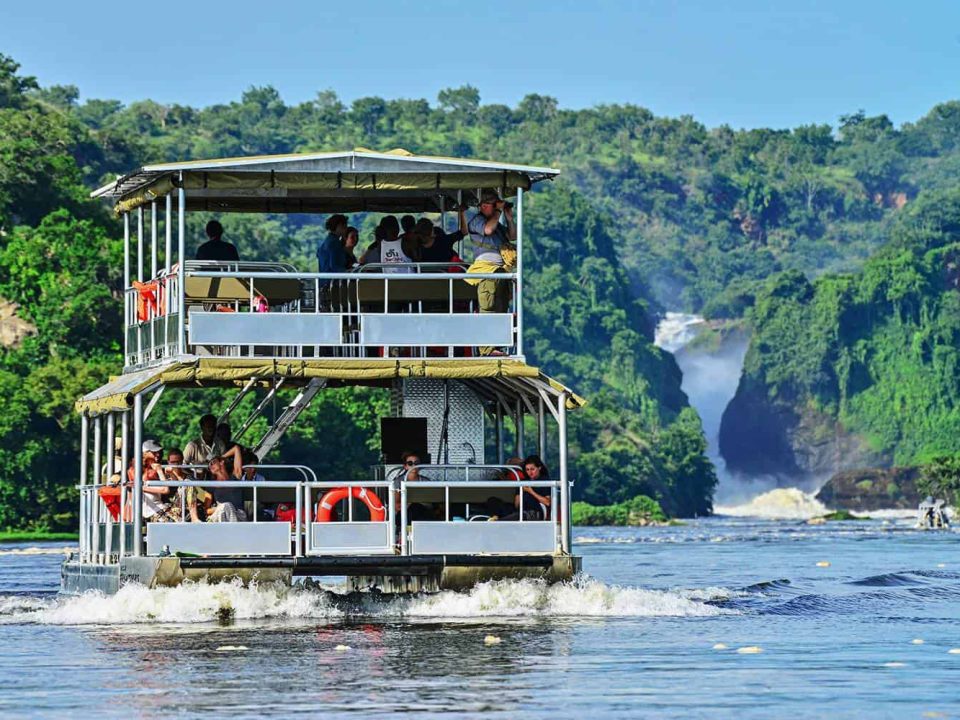
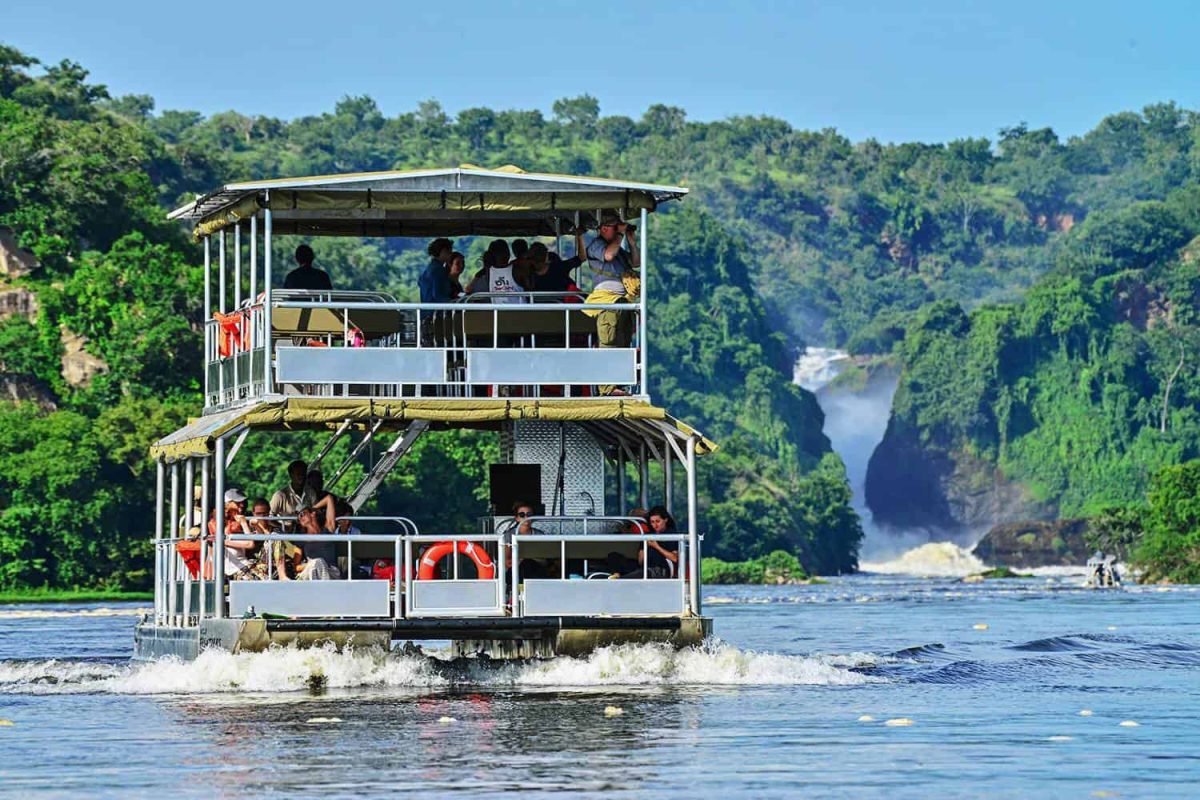
Uganda’s largest national park — where the entire Nile River is forced through a 7-metre gorge creating the world’s most powerful waterfall. Outstanding game drives and Nile boat safaris. “For the complete Murchison Falls experience read our Murchison Falls National Park 2026 guide.”
5. Lake Bunyonyi — Africa’s Most Beautiful Lake
One of Africa’s most beautiful lakes in southwestern Uganda — safe for swimming kayaking and island exploration. The perfect rest destination between gorilla trekking and other activities.
6. Kidepo Valley National Park — Uganda’s Wild North
One of Africa’s most remote and exclusive national parks — accessible by domestic flight — home to cheetahs striped hyenas Rothschild giraffes and extraordinary landscape scenery.
7. Jinja — The Source of the Nile
The Nile River begins its journey to the Mediterranean at Jinja in eastern Uganda — a fascinating historical and geographical landmark. Also Uganda’s adventure capital — white-water rafting bungee jumping and kayaking on the Nile.
8. Sipi Falls — Eastern Uganda’s Hidden Gem
Three spectacular waterfalls on the slopes of Mount Elgon in eastern Uganda — beautiful hiking birding and coffee plantation visits with extraordinary views over the Karamoja plains.
9. Ziwa Rhino Sanctuary — Uganda’s Only Rhinos
Uganda’s only rhino location — a managed sanctuary where southern white rhinos are being reintroduced. Rhino tracking on foot at very close range. Commonly visited en route to Murchison Falls.
10. Kampala — East Africa’s Most Vibrant Capital
Uganda’s capital is loud energetic and fascinating — the Kasubi Tombs (UNESCO World Heritage Site) the Uganda Museum the Bahai Temple the vibrant Owino Market and an extraordinary restaurant and nightlife scene make Kampala one of East Africa’s most rewarding cities to explore.
“For Uganda’s most accessible national park read our Lake Mburo National Park complete guide.”
Where to Stay in Uganda
Kampala and Entebbe
Budget ($30–$70/night): Red Chilli Hideaway · Cassia Lodge · Explorers Backpackers Mid-range ($80–$200/night): Protea Hotel Kampala · Mestil Hotel · Boma Inn Entebbe Luxury ($200–$500+/night): Serena Kampala Hotel · Sheraton Kampala · Boma Hotel
Near Bwindi Impenetrable Forest
Budget ($50–$100/night): Buhoma Community Rest Camp · Nkuringo Gorilla Camp Mid-range ($100–$300/night): Gorilla Valley Lodge · Bwindi View Bandas · Lake Mutanda Resort Luxury ($300–$800+/night): Mahogany Springs · Bwindi Lodge · Clouds Mountain Gorilla Lodge · Sanctuary Gorilla Forest Camp
Near Kibale Forest
Budget ($60–$100/night): Kibale Forest Camp · Chimpanzee Forest Guesthouse Mid-range ($120–$250/night): Primate Lodge Kibale · Kyaninga Lodge Luxury ($250–$600+/night): Kibale Forest Lodge · Ndali Lodge
Queen Elizabeth National Park
Budget ($60–$120/night): Mweya Hostel · Simba Safari Camp Mid-range ($150–$300/night): Elephant Plains Lodge · Enganzi Game Lodge Luxury ($350–$800+/night): Mweya Safari Lodge · Kyambura Gorge Lodge · Ishasha Wilderness Camp
Lake Bunyonyi
Budget ($30–$60/night): Byoona Amagara · Community campsites Mid-range ($60–$150/night): Lake Bunyonyi Eco Resort · Arcadia Cottages Luxury ($200–$400/night): Bird’s Nest Resort · Wagtail Eco Safari Camp
Ugandan Food and Drink
Traditional Ugandan Food
Ugandan cuisine is hearty filling and based on the country’s extraordinary agricultural abundance.
Matoke — steamed green bananas — Uganda’s national dish. Served with groundnut sauce meat or beans at almost every meal.
Rolex — Uganda’s most famous street food — a chapati rolled around scrambled eggs vegetables and sometimes meat. Cheap delicious and found everywhere.
Groundnut stew — rich peanut-based stew served with matoke or rice. One of Uganda’s finest traditional dishes.
Luwombo — chicken beef or groundnuts steamed in banana leaves — a traditional ceremonial dish from the Buganda kingdom.
Posho — stiff maize porridge — similar to Rwanda’s ugali. The most common starch accompaniment.
Tilapia — fresh Nile tilapia from Lake Victoria is Uganda’s finest fish — grilled or fried and served with matoke.
Nyama choma — grilled meat — beef or goat — Uganda’s most popular celebration food.
Ugandan Drinks
Nile Special — Uganda’s most popular beer — a clean refreshing lager brewed since 1952.
Club Beer — another popular local lager — widely available throughout Uganda.
Waragi — Uganda’s traditional gin made from banana or millet. Strong and distinctively Ugandan.
Banana beer (Tonto) — traditional fermented banana beer — an acquired taste but culturally significant.
Ugandan coffee — Uganda produces excellent robusta and arabica coffee. The Sipi Falls region produces award-winning specialty coffee — look for it in Kampala cafés.
Best Restaurants in Kampala
Café Javas — Uganda’s most popular café chain — excellent breakfast coffee and casual meals throughout Kampala.
Fang Fang — Kampala’s best Chinese restaurant — consistently excellent and popular with expats.
The Lawns — elegant garden restaurant serving excellent continental cuisine in a beautiful setting.
Endiro Coffee — Uganda’s finest specialty coffee roastery and café — excellent single-origin Ugandan coffee.
Khana Khazana — excellent Indian cuisine — Kampala’s most popular Indian restaurant.
Uganda Cultural Etiquette
Greetings matter — Ugandans greet each other warmly and at length. Taking time to exchange greetings before getting to the point of any interaction is important and appreciated.
Dress modestly — outside Kampala and particularly in rural areas dress conservatively. Covered shoulders and knees show respect for local culture.
Photography etiquette — always ask permission before photographing people. Most Ugandans are happy to be photographed but asking first shows respect.
Remove shoes — when entering someone’s home remove your shoes at the door — this is standard practice throughout Uganda.
Left hand — avoid giving or receiving items with your left hand — this is considered rude in Ugandan culture. Use your right hand or both hands.
Boda-bodas — motorcycle taxis are ubiquitous but have a poor safety record. If you use one ensure the driver gives you a helmet — it is legally required and practically essential.
Learning some Luganda — even a few words are warmly appreciated:
- Oli otya? — How are you?
- Gyendi — Fine
- Webale — Thank you
- Ssebo/Nyabo — Sir/Madam (respectful address)
Uganda travel guide: Practical Information
Internet and Mobile Connectivity
Uganda travel guide: Uganda has good mobile network coverage in Kampala Entebbe and major towns. 4G LTE is available in urban areas. Coverage in remote national parks can be very limited — Bwindi and Kidepo have poor mobile coverage.
Best SIM cards: MTN Uganda and Airtel Uganda — both offer prepaid SIM cards with data at Entebbe airport and throughout the country. A SIM with data costs approximately $3–$5.
Electricity
Uganda uses 240V British three-pin plugs (same as UK) — bring a universal travel adaptor if you don’t use British plugs. Power cuts are common outside major towns — most lodges have backup generators.
Shopping in Uganda
Owino Market (Kampala) — Uganda’s largest market — extraordinary for local life and budget shopping.
Crafts Village (Kampala) — good selection of Ugandan crafts wooden carvings and souvenirs.
Banana Boat (Kampala) — the best fixed-price craft shop in Uganda — good quality baskets carvings and textiles.
Best Uganda souvenirs:
- Bark cloth — Uganda’s traditional material made from fig tree bark — unique to Uganda
- Woven baskets — beautiful coiled baskets similar to Rwanda’s
- Wooden carvings — gorillas elephants and traditional figures
- Ugandan coffee — excellent quality single-origin coffee to take home
- Kanzu — the traditional white robe worn by Ugandan men — beautiful and distinctive
Planning Your Uganda Safari with Go Safaris Africa
Go Safaris Africa is a Kigali-based safari operator with deep expertise across Uganda Rwanda Kenya and Tanzania. We plan Uganda safaris of every kind — gorilla trekking adventures chimpanzee safaris complete national park circuits honeymoon itineraries family holidays and bespoke tailor-made journeys.
Our team knows Uganda intimately — every gorilla family every national park every lodge and every border crossing. When you plan your Uganda trip with us you get genuine local expertise combined with the highest standards of service and support.
Our most popular Uganda packages:
- 👉 Complete 10-day Uganda safari itinerary
- 👉 Bwindi Impenetrable Forest complete guide
- 👉 Uganda gorilla permit 2026 guide
- 👉 Chimpanzee trekking Kibale Forest guide
- 👉 Gorilla trekking Rwanda vs Uganda comparison
- 👉 Uganda safari packages
📞 Call or WhatsApp: +250 788 365 595 📧 info@gosafarisafrica.com 🌐 www.gosafarisafrica.com
Plan your Uganda safari today →
Frequently Asked Questions: Uganda travel guide
Is Uganda safe to visit in 2026? Yes — Uganda is a stable and welcoming country. The main tourist areas — Kampala Entebbe and the western safari circuit including Bwindi Kibale and Queen Elizabeth — are completely safe. Standard travel precautions apply as with any international destination.
Do I need a visa for Uganda? Most nationalities need a Uganda e-visa ($50 USD) available online. The East African Tourist Visa ($100) covers Uganda Rwanda and Kenya — excellent value for combined safaris.
What is the best time to visit Uganda? June–September and December–February offer the best conditions for gorilla trekking and all outdoor activities. Uganda can be visited year-round — gorillas and chimpanzees are present every day. Read our best time guide for the complete seasonal breakdown.
How much does a Uganda safari cost? A gorilla permit costs $800 per person. A complete 10-day Uganda safari starts from approximately $3,355 per person. Read our 10-day Uganda safari itinerary for the full cost breakdown.
What language is spoken in Uganda? English and Swahili are official languages and English is widely spoken throughout the country particularly in tourism. Luganda is the most widely spoken indigenous language in central Uganda.
Can I use US dollars in Uganda? Yes — US dollars are widely accepted for tourism payments throughout Uganda. Ugandan Shillings are used for local purchases. ATMs dispense Ugandan Shillings.
What vaccinations do I need for Uganda? Yellow fever vaccination is mandatory. Hepatitis A typhoid and tetanus are strongly recommended. Antimalarial medication is essential. Consult your doctor 4–6 weeks before travel.
How do I get from Rwanda to Uganda? The most common crossing is at Katuna/Gatuna — 2.5 hours from Kigali connecting to Uganda’s southwest. The Cyanika crossing connects Rwanda’s Musanze area directly with Uganda’s Kisoro District just 30 minutes from Bwindi. Read our gorilla trekking Rwanda vs Uganda guide for full cross-border details.
Is Uganda good for birding? Extraordinarily so — Uganda has over 1,000 recorded bird species more than the entire North American continent. Bwindi Kibale Queen Elizabeth and Murchison Falls are all world-class birding destinations. Uganda is consistently ranked one of Africa’s top 5 birding destinations.
What is Uganda most famous for? Mountain gorilla trekking in Bwindi Impenetrable Forest chimpanzee trekking in Kibale Forest tree-climbing lions in Queen Elizabeth National Park Murchison Falls — the world’s most powerful waterfall — and the source of the Nile at Jinja.
Go Safaris Africa is a Kigali-based safari operator specialising in gorilla trekking wildlife safaris and tailor-made adventures across Rwanda Uganda Kenya and Tanzania. 📍 Prince House Second Floor Office #5 Kigali Rwanda 📞 +250 788 365 595 | 🌐 www.gosafarisafrica.com