


Chimpanzee trekking Kibale Forest is one of the greatest and most underrated wildlife experiences in all of Africa. While gorilla trekking in Rwanda and Uganda rightfully captures most of the attention, chimpanzee trekking in Kibale Forest offers something completely different — and in many ways even more thrilling.
Chimpanzees are our closest living relatives sharing 98.7% of human DNA. Watching them interact, communicate, forage, play, and socialise in their natural forest habitat is a profound and humbling experience — one that forces you to confront just how thin the line is between human and animal behaviour.
Kibale Forest National Park in western Uganda is the best place in Africa for chimpanzee trekking — home to approximately 1,500 chimpanzees in the highest density of any forest on the continent. This complete guide covers everything you need to know about chimpanzee trekking Kibale Forest in 2026 — permits, costs, what to expect, best time to visit, where to stay, and how to combine it with gorilla trekking for the ultimate Uganda primate safari.
Why Kibale Forest is Africa’s Best Chimpanzee Trekking Destination
There are several places in Africa where you can trek with chimpanzees — Gombe and Mahale in Tanzania, Nyungwe in Rwanda, Budongo in Uganda — but Kibale Forest National Park stands apart from all of them for several compelling reasons:
Highest chimpanzee density in Africa Kibale Forest is home to approximately 1,500 chimpanzees — the highest concentration of chimpanzees anywhere on the African continent. With more chimps come more sightings, more group interactions, and a more reliable and rewarding chimpanzee trekking experience.
Best habituated communities Kibale has multiple fully habituated chimpanzee communities that have been accustomed to human presence over years of careful research and tourism management. The Kanyanchu community — the main trekking community — has been habituated since the early 1990s.
Extraordinary additional biodiversity Kibale Forest contains 13 primate species — the highest primate diversity of any East African forest. On a single chimpanzee trekking Kibale Forest day you can encounter red-tailed monkeys, L’Hoest’s monkeys, olive baboons, black and white colobus monkeys, grey-cheeked mangabeys, and more alongside the chimpanzees.
Perfect combination with gorilla trekking Kibale Forest is strategically located in western Uganda — within easy reach of Bwindi Impenetrable Forest for gorilla trekking and Queen Elizabeth National Park for game drives. A combined Uganda primate safari featuring chimpanzee trekking Kibale Forest and gorilla trekking Bwindi is one of the world’s greatest wildlife itineraries. Read our 10-day Uganda safari itinerary for the complete combined experience.
Affordable permit price A chimpanzee trekking permit for Kibale Forest costs just $200 USD — a fraction of the $800 Uganda gorilla permit or $1,500 Rwanda gorilla permit. Extraordinary value for one of Africa’s most remarkable wildlife experiences.
Kibale Forest National Park: Essential Facts
| Location | Western Uganda, Fort Portal District |
| Size | 795 km² |
| Altitude | 1,100m – 1,590m |
| Established | 1993 as national park |
| Chimpanzee population | ~1,500 |
| Total primate species | 13 — highest in East Africa |
| Bird species | 375+ including 6 Albertine Rift endemics |
| Main trekking site | Kanyanchu Visitor Centre |
| Permit cost | $200 USD per person |
| Distance from Kampala | 330 km — approximately 5–6 hours |
| Distance from Fort Portal | 22 km — 30 minutes |
| Nearest airstrip | Kasese (1.5 hours) or Kihihi (2 hours) |
Chimpanzee Trekking Kibale Forest: The Full Experience
Before the Trek — Kanyanchu Visitor Centre Briefing
All chimpanzee trekking Kibale Forest experiences begin at Kanyanchu Visitor Centre — the main tourism hub of Kibale Forest National Park. Two trekking sessions operate daily:
Morning session: Briefing at 7:30am — trek begins 8:00am Afternoon session: Briefing at 2:00pm — trek begins 2:30pm
The morning session is generally preferred — chimpanzees are more active in the cooler morning hours and the forest light is better for photography.
At the briefing Uganda Wildlife Authority rangers explain the rules and etiquette for chimpanzee trekking Kibale Forest:
- Maintain at least 8 metres distance from the chimpanzees at all times
- No flash photography — ever
- Maximum 8 people per chimpanzee community per session
- No trekking if you are ill — chimps are highly susceptible to human respiratory diseases
- Follow ranger instructions at all times
- Stay together as a group at all times
- No eating or drinking in the presence of the chimps
The Trek — Into Kibale Forest
After the briefing your ranger guide leads your group of up to 8 people into Kibale Forest. The forest is extraordinarily beautiful — towering hardwood trees, dense undergrowth, shafts of morning light filtering through the canopy, and the constant soundtrack of birdsong and primate calls from every direction.
Finding the chimpanzees Unlike gorilla trekking where ranger trackers locate the gorilla family from dawn and guide you directly to them, chimpanzee trekking Kibale Forest involves actively searching for the chimp community as they move through the forest. This makes each trek unique and unpredictable — but also more exciting.
Your ranger guide communicates by radio with trackers who follow the community throughout the day. Trek duration varies significantly depending on chimpanzee location and movement:
- Shortest treks: 30–60 minutes if chimps are close to the trailhead
- Average treks: 1–3 hours
- Longest treks: Up to 4–5 hours on days when chimps have moved deep into the forest
The terrain in Kibale Forest is generally less steep than gorilla trekking in Volcanoes National Park or Bwindi — the forest floor is relatively flat making chimpanzee trekking Kibale Forest accessible to most fitness levels.
The Encounter — One Hour with the Chimpanzees
When your tracker signals that the chimpanzee community is close the group falls silent and approaches slowly. And then — suddenly — you are in the middle of it.
Chimpanzee trekking Kibale Forest encounters are dramatically different from the quiet dignity of gorilla trekking. Chimpanzees are fast, noisy, chaotic, and endlessly fascinating. The community moves through the forest continuously — feeding on figs and other fruits high in the canopy, grooming each other on the forest floor, chasing each other through the undergrowth, and making the forest ring with their extraordinary vocal range.
The famous chimp drum roll If you are lucky you will witness one of nature’s most extraordinary sounds — a chimpanzee drumming on the massive buttress roots of a fig tree. The deep resonant booming carries for hundreds of metres through the forest. It is a sound that connects directly to something ancient and primal in the human brain — a reminder of just how close we are to these extraordinary animals.
Chimpanzee behaviour to watch for:
- Grooming — two or more chimps carefully picking through each other’s fur. The primary social bonding behaviour in chimpanzee communities
- Tool use — chimps using sticks to extract termites from mounds. One of the behaviours that first shocked the scientific world when Jane Goodall observed it in the 1960s
- Food sharing — dominant males distributing food to favoured community members
- Play behaviour — young chimps chasing, wrestling, and swinging through the canopy
- Charging displays — dominant males occasionally put on dramatic charging displays — bipedal rushing, branch dragging, screaming. Exhilarating to witness from a safe distance
- Eye contact — when a chimpanzee looks directly at you the intelligence and personality behind those eyes is unmistakable and unforgettable
You spend one hour with the chimpanzee community. Many visitors report that this hour feels simultaneously like five minutes and five hours — time distorts completely in the presence of these animals.
Chimpanzee Trekking Kibale Forest: Permit and Costs
Permit Cost
A chimpanzee trekking permit for Kibale Forest costs $200 USD per person — issued by the Uganda Wildlife Authority. This includes:
✅ One chimpanzee trek (morning or afternoon session) ✅ One hour with the habituated chimpanzee community ✅ Professional Uganda Wildlife Authority ranger guide ✅ Kibale Forest National Park entrance fees
How to Book Your Kibale Forest Permit
Permits can be booked directly with the Uganda Wildlife Authority or — more conveniently — through Go Safaris Africa as part of a complete Uganda primate safari package.
Go Safaris Africa books chimpanzee trekking Kibale Forest permits daily and can combine your chimp permit with gorilla permits, accommodation, transport, and guiding across Uganda and Rwanda.
👉 Book your Uganda primate safari 👉 Contact us to arrange permits
Chimpanzee Habituation Experience — Kibale Forest
For the most immersive chimpanzee experience available Kibale Forest also offers a Chimpanzee Habituation Experience (CHEX) — spending a full day (from 6:00am to 6:00pm) with a chimpanzee community that is still being habituated to human presence.
Unlike the standard 1-hour chimpanzee trek CHEX allows you to spend the entire day with the chimps — following them from their sleeping nests at dawn through their full daily routine of foraging, social interactions, and territorial behaviour until they build new sleeping nests at dusk.
CHEX permit cost: $250 USD per person Duration: Full day — 6:00am to 6:00pm Group size: Maximum 4 people per day Location: Kanyanchu, Kibale Forest
The Chimpanzee Habituation Experience is one of the most extraordinary wildlife experiences available anywhere in Africa — and at $250 USD extraordinary value for a full day with chimpanzees. Contact Go Safaris Africa to include CHEX in your Uganda itinerary.
Bigodi Wetland Sanctuary — The Perfect Afternoon Complement
Every visitor doing chimpanzee trekking Kibale Forest should combine it with an afternoon walk in Bigodi Wetland Sanctuary — a community-managed papyrus swamp immediately adjacent to the park.
Bigodi is one of Uganda’s finest and most rewarding short wildlife walks:
Primates: 8 primate species including red colobus monkeys, grey-cheeked mangabeys, L’Hoest’s monkeys, olive baboons, and black and white colobus — all commonly seen on the 3-hour guided walk
Birds: Over 200 bird species in a compact walkable area — Bigodi is one of Uganda’s premier birding sites. Great blue turaco, African grey parrot, papyrus gonolek, and dozens of other spectacular species
Community benefit: All entry fees go directly to the Bigodi community — one of Uganda’s finest examples of community conservation tourism
Bigodi entry fee: Approximately $10 USD per person — outstanding value
A perfect morning of chimpanzee trekking Kibale Forest followed by an afternoon walk in Bigodi Wetland Sanctuary makes for one of the most wildlife-rich days of any Uganda safari itinerary.
Wildlife in Kibale Forest
Chimpanzees are the headline attraction but Kibale Forest is extraordinarily rich in wildlife beyond the chimps:
The 13 Primate Species of Kibale Forest
| Primate | Common Sighting? |
|---|---|
| Chimpanzee | ✅ Most common — main target |
| Red-tailed monkey | ✅ Very common |
| L’Hoest’s monkey | ✅ Common |
| Grey-cheeked mangabey | ✅ Common |
| Black and white colobus | ✅ Common |
| Olive baboon | ✅ Very common |
| Red colobus monkey | ✅ Common |
| Blue monkey | ✅ Common |
| Demidoff’s galago | ⭐ Nocturnal — night walks |
| Potto | ⭐ Nocturnal — night walks |
| Uganda mangabey | ⭐ Less common |
| Vervet monkey | ✅ Common at forest edge |
| Bush baby | ⭐ Nocturnal — night walks |
Birds — 375+ Species
Kibale Forest is a world-class birding destination. Key species include:
- African grey parrot — iconic and increasingly rare across Africa
- Great blue turaco — spectacular — the largest turaco species
- Green-breasted pitta — one of Africa’s most sought-after birds
- African pitta — rare and beautiful
- Black bee-eater — stunning and common in forest clearings
- Nahan’s francolin — Kibale endemic — found almost nowhere else
- Cassin’s spinetail — Albertine Rift endemic
- Over 6 Albertine Rift endemic species
Even non-birders are consistently amazed by the colour and diversity of birds encountered during chimpanzee trekking Kibale Forest and the Bigodi walk.
Other Wildlife
- Forest elephants — present in the park but rarely seen by trekkers
- African buffalo — occasionally encountered
- Bushbuck — commonly seen at forest edges
- Giant forest hog — the world’s largest pig — occasionally encountered
- African leopard — present but extremely elusive
- Various mongoose species
- Monitor lizards
- Forest cobras — rarely seen — rangers are trained to manage encounters
Best Time for Chimpanzee Trekking Kibale Forest
Kibale Forest can be visited and chimpanzees can be trekked year-round. However the season significantly affects the experience:
Dry Season — June to September and December to February ⭐⭐⭐⭐⭐
The best time for chimpanzee trekking Kibale Forest. Trails are drier and firmer making trekking more comfortable and easier. Chimpanzees tend to forage lower in the canopy during dry season — making them easier to photograph and observe.
June–September is peak season — book permits and accommodation well in advance. December–February offers excellent conditions with better availability and lower lodge rates than peak season.
Wet Season — March to May and October to November ⭐⭐⭐
Chimpanzee trekking Kibale Forest continues year-round regardless of rain — chimps do not disappear during wet season. Trails become muddier but remain manageable. The forest is extraordinarily lush and beautiful. Lodge rates drop 20–30% below peak season prices.
During wet season bring excellent waterproof gear and wear gaiters. Read our complete gorilla trekking packing list — the same gear applies to chimpanzee trekking Kibale Forest.
For a complete seasonal guide read our best time to visit Rwanda for gorilla trekking guide — Uganda’s seasons follow identical patterns.
Getting to Kibale Forest National Park
From Kampala by Road (5–6 hours)
The most common route is Kampala → Fort Portal → Kibale Forest — approximately 330 km on well-maintained tarmac road. The drive through western Uganda’s tea plantations and crater lake region is beautiful in itself.
Fort Portal (22 km from Kanyanchu) is the gateway town to Kibale Forest — a pleasant highland town with good accommodation options and excellent crater lake scenery nearby.
By Domestic Flight (Recommended)
Flying significantly reduces travel time and maximises time in the field:
Entebbe to Kasese airstrip: 1 hour flying — then 1.5 hours by road to Kibale Forest Entebbe to Kihihi airstrip: 45 minutes flying — then 2 hours by road to Kibale
Go Safaris Africa arranges all domestic flight bookings as part of Uganda safari packages.
From Bwindi Impenetrable Forest
Kibale Forest is approximately 4–5 hours by road from Bwindi — making a combined gorilla trekking and chimpanzee trekking Kibale Forest itinerary very practical. Read our 10-day Uganda safari itinerary for the complete combined route.
From Rwanda
From Kigali the drive to Kibale Forest takes approximately 7–8 hours via the Gatuna border crossing. This route is excellent for travellers combining Rwanda gorilla trekking with Uganda chimpanzee trekking — read our gorilla trekking Rwanda vs Uganda guide for cross-border itinerary details.
Where to Stay near Kibale Forest
Budget ($50–$100/night)
Kibale Forest Camp — simple tented camp near Kanyanchu. Basic but comfortable. Good community-run facilities. Rwenzori Turaco View — budget guesthouse in Fort Portal with good views and friendly staff.
Mid-Range ($100–$250/night)
Primate Lodge Kibale — comfortable lodge adjacent to the national park. Excellent location, good food, and knowledgeable guides. Chimpanzee Forest Guesthouse — cosy mid-range option in the forest edge setting near Kanyanchu. Kyaninga Lodge — stunning mid-range lodge on a crater lake near Fort Portal. Beautiful setting and excellent cuisine.
Luxury ($250–$600/night)
Kibale Forest Lodge — the finest luxury lodge near Kibale Forest. Beautiful forest setting, excellent food, attentive service, and a swimming pool overlooking the forest canopy. Ndali Lodge — extraordinary luxury lodge on a crater lake overlooking the Rwenzori Mountains. One of Uganda’s most romantic and beautiful lodges. Highly recommended for honeymooners combining with chimpanzee trekking Kibale Forest.
Combining Chimpanzee Trekking Kibale Forest with Other Uganda Experiences
Kibale Forest is perfectly positioned for combining with Uganda’s other great wildlife experiences:
Kibale + Bwindi Gorilla Trekking (Most Popular Combination)
The definitive Uganda primate safari — chimpanzee trekking in Kibale combined with gorilla trekking in Bwindi. Two days of extraordinary primate encounters separated by a scenic mountain drive through Queen Elizabeth National Park. Read our complete 10-day Uganda safari itinerary.
Kibale + Queen Elizabeth National Park
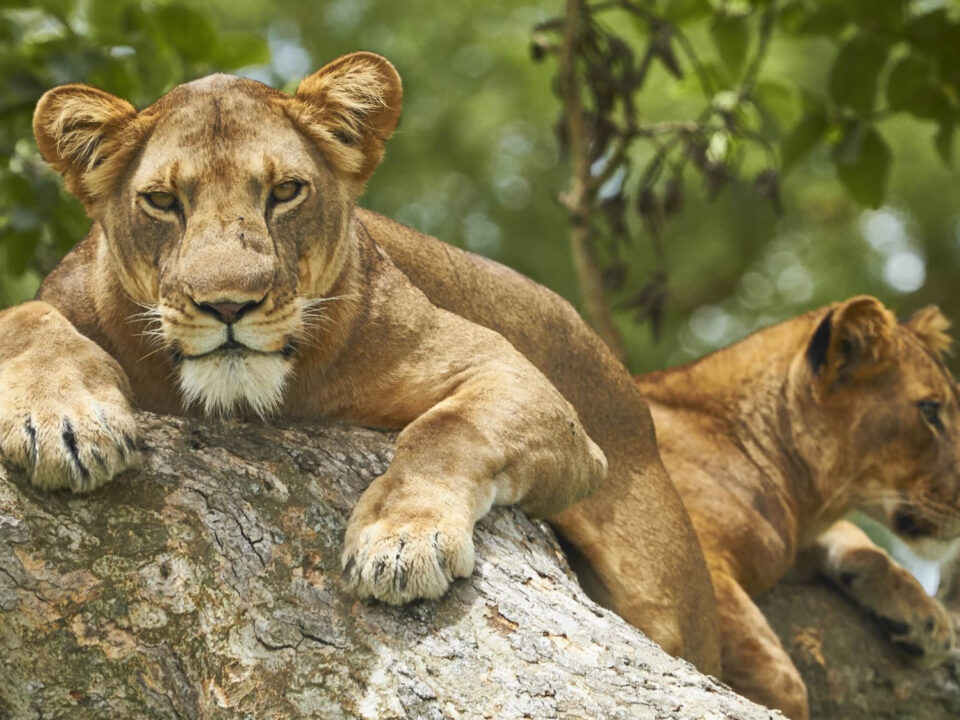
Queen Elizabeth National Park is just 1–2 hours south of Kibale — perfect for combining chimp trekking with game drives, the Kazinga Channel boat safari, and tree-climbing lion sightings. Read our 10-day Uganda safari guide for the complete route.
“For chimpanzees in a dramatic gorge setting read our Queen Elizabeth National Park guide — Kyambura Gorge offers a uniquely atmospheric chimp experience.”
Kibale + Rwanda Gorilla Trekking (Cross-Border)
Combine chimpanzee trekking Kibale Forest with gorilla trekking in Rwanda’s Volcanoes National Park for a spectacular cross-border primate safari. Contact Go Safaris Africa for combined Uganda-Rwanda itineraries.
“Rwanda also offers chimpanzee trekking — read our Nyungwe Forest National Park guide for Rwanda’s chimpanzee trekking experience.”
Kibale + Murchison Falls National Park
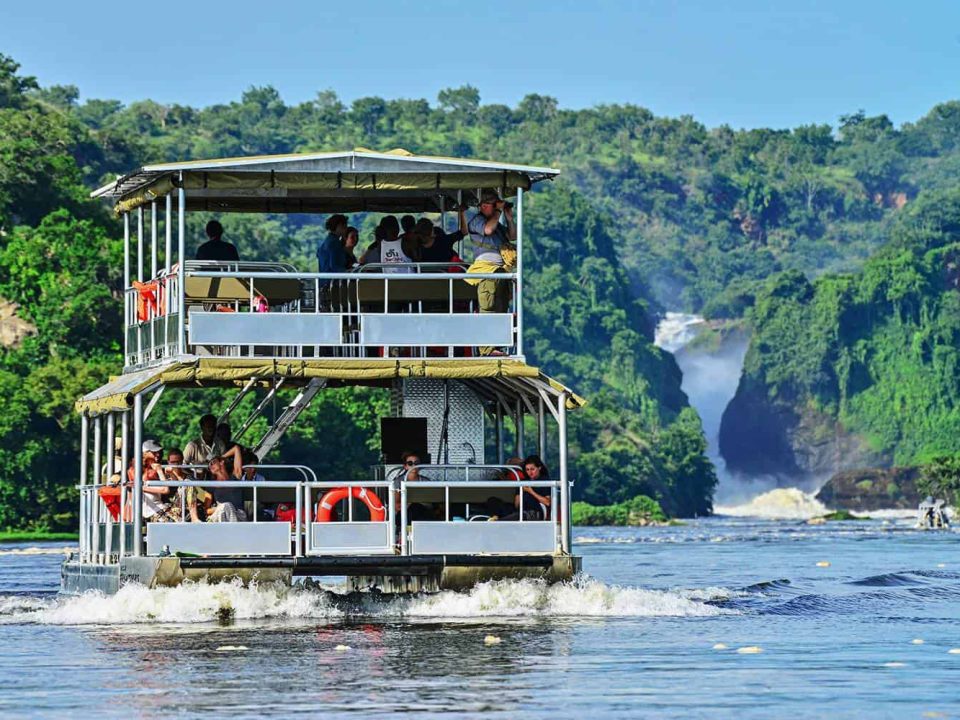
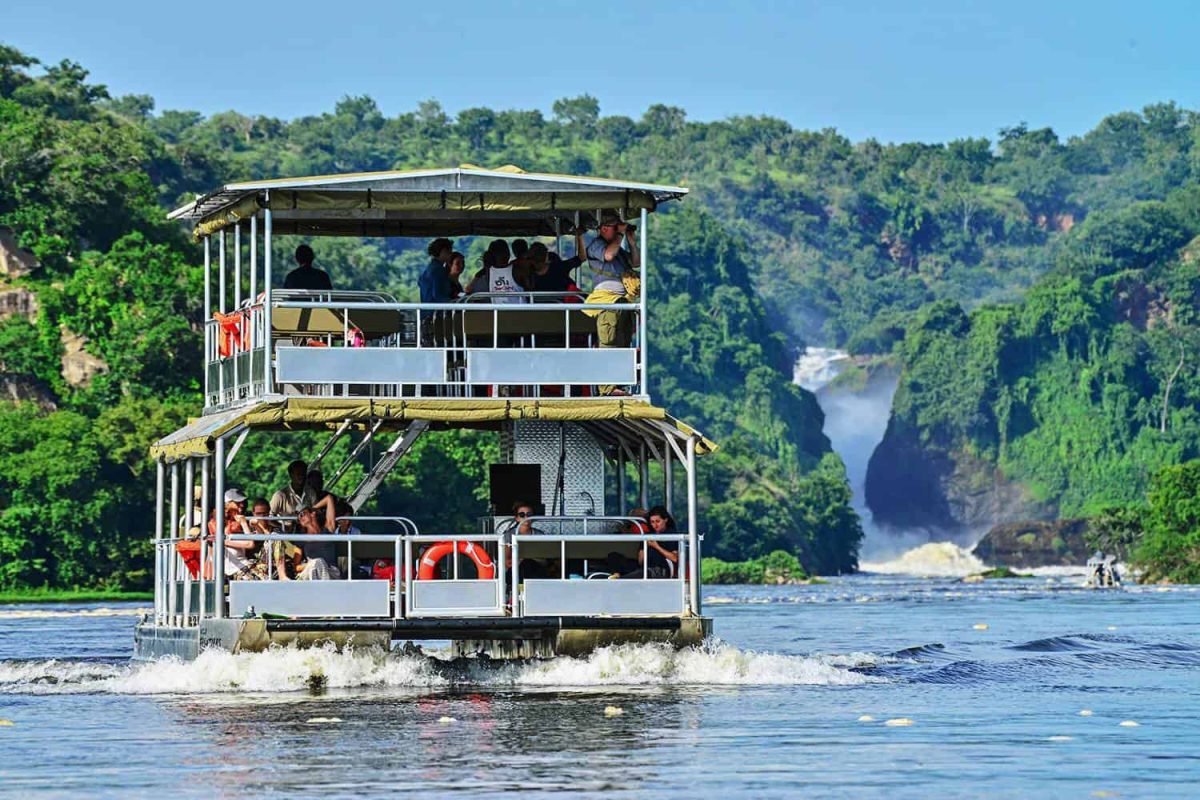
Uganda’s largest national park in the northwest — home to the world’s most powerful waterfall, Nile crocodiles, enormous hippo pods, Rothschild giraffes, and the rare shoebill stork. A 5-hour drive from Kibale — best for travellers with 10+ days in Uganda.
Preparing for Chimpanzee Trekking Kibale Forest
Chimpanzee trekking Kibale Forest is generally less physically demanding than gorilla trekking — the terrain is flatter and treks are typically shorter. However good preparation makes a significant difference to your experience.
What to Wear
- Long-sleeved shirt — protects against insects and nettles
- Long trousers — tucked into socks to prevent safari ants
- Waterproof hiking boots with ankle support
- Lightweight rain jacket
- Hat for sun at the forest edge
What to Bring
- Camera with no flash — silent mode essential
- Extra camera batteries — charged the night before
- Plenty of water — minimum 2 litres
- Energy snacks — trek duration is unpredictable
- Insect repellent — DEET-based
Read our complete gorilla trekking packing list — all recommendations apply equally to chimpanzee trekking Kibale Forest.
Health Considerations
- Do not trek if you have a cold, flu, or any respiratory illness — chimps are highly susceptible to human diseases
- Apply insect repellent before entering the forest
- Wear long sleeves and trousers — the forest has biting insects
- Stay hydrated throughout the trek
Book Your Chimpanzee Trekking Kibale Forest Safari
Go Safaris Africa plans and operates chimpanzee trekking Kibale Forest safaris every week. We handle all permit bookings, accommodation, transport, and guiding — combining Kibale Forest chimp trekking with gorilla trekking in Bwindi or Rwanda for the ultimate East Africa primate safari.
- 👉 View our Uganda safari packages
- 👉 View our 10-day Uganda safari itinerary
- 👉 Book gorilla and chimp permits
- 👉 Contact us for a free custom quote
📞 Call or WhatsApp: +250 788 365 595 📧 info@gosafarisafrica.com 🌐 www.gosafarisafrica.com
Frequently Asked Questions
How much does chimpanzee trekking Kibale Forest cost? A chimpanzee trekking permit for Kibale Forest costs $200 USD per person — issued by the Uganda Wildlife Authority. The Chimpanzee Habituation Experience (full day) costs $250 USD. Book through Go Safaris Africa for the complete package including transport and accommodation.
How long is chimpanzee trekking Kibale Forest? The trek to find the chimps takes 30 minutes to 5 hours depending on their location. Once found you spend one hour with the community. The Chimpanzee Habituation Experience lasts the full day from 6:00am to 6:00pm.
Is chimpanzee trekking Kibale Forest difficult? Kibale Forest terrain is generally flatter than gorilla trekking in Bwindi or Volcanoes National Park. Most people of average fitness complete the trek comfortably. Bring good waterproof boots and plenty of water.
Can I combine chimpanzee trekking Kibale Forest with gorilla trekking? Absolutely — this is one of our most popular combinations. Kibale Forest is 4–5 hours from Bwindi Impenetrable Forest making a combined Uganda primate safari very practical. Read our 10-day Uganda safari itinerary for the complete combined route.
What is the best time for chimpanzee trekking Kibale Forest? June–September and December–February offer the best conditions — drier trails and chimps foraging lower in the canopy. Chimpanzee trekking operates year-round. For seasonal details read our best time to visit Rwanda guide — Uganda follows identical seasonal patterns.
How many chimpanzees live in Kibale Forest? Approximately 1,500 chimpanzees live in Kibale Forest — the highest density of any forest in East Africa. The main trekking community at Kanyanchu has approximately 120 individuals.
Is chimpanzee trekking Kibale Forest better than gorilla trekking? They are completely different and equally extraordinary experiences. Gorilla trekking is quieter, more intimate, and more awe-inspiring. Chimpanzee trekking is faster, louder, more chaotic, and more entertaining. Most visitors who do both say they are impossible to compare — each is extraordinary in its own way. Read our gorilla trekking Rwanda vs Uganda guide for more context.
Do I need travel insurance for chimpanzee trekking Kibale Forest? Yes — comprehensive travel insurance covering trekking activities and medical evacuation is essential. If you are ill on trek day you cannot trek and your permit is non-refundable.
Go Safaris Africa is a Kigali-based safari operator specialising in gorilla trekking, wildlife safaris, and tailor-made adventures across Rwanda, Uganda, Kenya, and Tanzania. 📍 Prince House, Second Floor, Office #5, Kigali, Rwanda 📞 +250 788 365 595 | 🌐 www.gosafarisafrica.com