
The Rwanda conservation success story is one of the most extraordinary and most inspiring chapters in the history of wildlife conservation anywhere on Earth. In less than three decades a country that emerged from the devastation of genocide with its wildlife decimated its forests degraded and its national parks abandoned has transformed itself into one of Africa’s most celebrated conservation success stories — a model that governments conservation organisations and safari operators around the world study and seek to replicate.
At the heart of the Rwanda conservation success story are the mountain gorillas — the critically endangered great apes whose population has grown from fewer than 250 individuals when conservation efforts began to over 1,063 today. But the story is bigger than gorillas. It encompasses the remarkable recovery of Akagera National Park the protection of Nyungwe Forest the extraordinary commitment of the Rwandan government to conservation as a national priority and the ingenious community-based models that have made local people genuine partners in protecting Rwanda’s wildlife rather than threats to it.
This complete guide to the Rwanda conservation success story tells the full narrative — the history the achievements the methods and the lessons — and explains why every gorilla trekking visit to Rwanda is a direct contribution to one of the greatest conservation achievements in African history.
The State of Rwanda’s Wildlife Before Conservation
To fully appreciate the Rwanda conservation success story you must first understand what Rwanda’s wildlife faced — and how close to complete collapse it came.
The Pre-1990s Baseline
Rwanda has always been one of Africa’s most densely populated countries — more people per square kilometre than almost any other African nation outside South Africa’s urban areas. This population density created enormous pressure on wildlife and habitat throughout the 20th century.
By the 1980s Rwanda’s situation was concerning:
- Mountain gorilla population had declined to approximately 254 individuals — critically close to extinction
- Volcanoes National Park was under constant pressure from agricultural encroachment
- Poaching of gorillas for bushmeat and capture of infants for sale to zoos was ongoing
- Akagera National Park had been significantly reduced in size as agricultural pressure grew
- Nyungwe Forest was being illegally logged and cleared for farmland
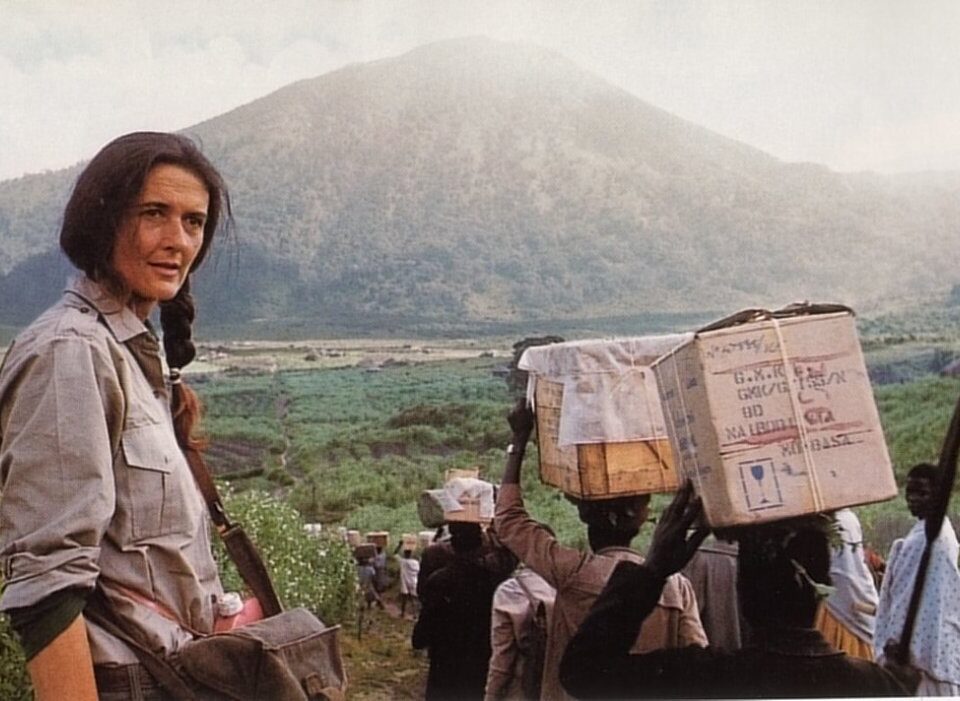
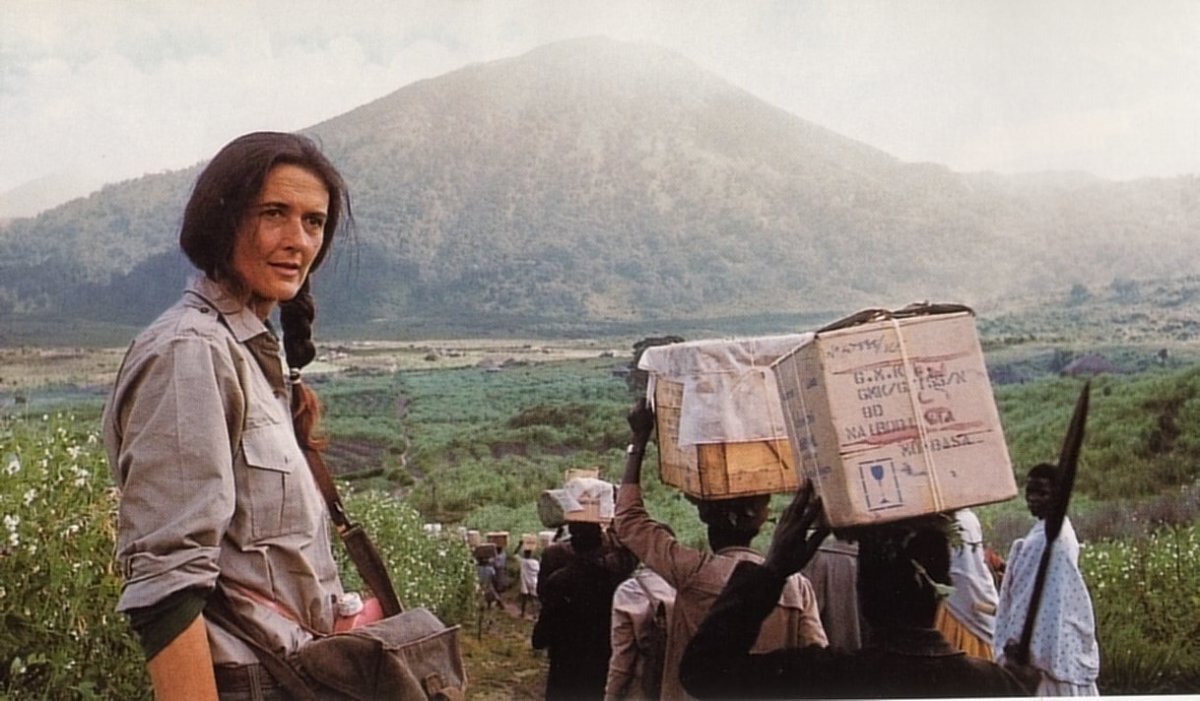
The mountain gorillas were the most visible crisis — Dian Fossey’s research and her book Gorillas in the Mist had brought international attention to their plight but on the ground the pressure continued.
The 1994 Genocide — The Nadir
The 1994 genocide against the Tutsi — in which approximately 800,000 people were killed in 100 days — was catastrophic for Rwanda’s people and devastating for its wildlife and conservation infrastructure.
What happened to Rwanda’s wildlife during and after 1994:
Volcanoes National Park: Park rangers fled or were killed. Anti-poaching patrols collapsed. Gorilla monitoring stopped. The fate of the gorilla families during this period was uncertain and deeply concerning.
Akagera National Park: The park was reduced from 2,500 km² to just 1,122 km² as returning refugees from Congo settled inside park boundaries. Lions were completely eliminated — shot by settlers protecting their livestock. Black rhinos were poached to extinction in the park. Most large predators disappeared.
Nyungwe Forest: Illegal logging and charcoal production accelerated as desperate communities stripped the forest for fuel and construction materials.
The wildlife rangers: Many were killed. The entire conservation infrastructure — years of relationship-building monitoring and anti-poaching capacity — largely collapsed.
By 1995 Rwanda’s wildlife was in its worst condition in living memory. The question was not how to improve the situation — it was whether any meaningful conservation was possible at all.
The Gorilla Recovery — The Greatest Success | Rwanda conservation success story
The recovery of Rwanda’s mountain gorilla population is the centrepiece of the Rwanda conservation success story — and one of the most remarkable wildlife conservation achievements in history.
The Numbers
| Year | Mountain Gorilla Population | Status |
|---|---|---|
| 1981 | ~254 (Dian Fossey census) | Critically endangered |
| 1989 | ~620 (first comprehensive census) | Still critically endangered |
| 2003 | ~380 (Virunga range alone) | Recovering |
| 2010 | ~480 (Virunga range) | Recovering |
| 2016 | ~880 (both ranges) | First positive trend |
| 2018 | ~1,004 (both ranges) | Population exceeds 1,000 |
| 2024 | ~1,063 (both ranges) | Continuing to increase |
Mountain gorillas are now the only great ape subspecies whose population is increasing. Every other great ape — chimpanzees bonobos orangutans western gorillas — is declining. Mountain gorillas are going the other way. And Rwanda is the primary reason.
What Made the Gorilla Recovery Possible
1. The Rwanda Development Board permit system The Rwanda Development Board’s gorilla trekking permit system — issuing a maximum of 96 permits per day at $1,500 each — generates approximately $50 million per year in gorilla tourism revenue for Rwanda. A significant portion of this revenue flows directly to anti-poaching ranger patrols gorilla health monitoring and community development.
The genius of this system is that it makes mountain gorillas extraordinarily economically valuable — more valuable alive and protected than any alternative use of the land or the animals. When a gorilla family generates millions of dollars in tourism revenue annually the financial case for protecting them is overwhelming.
2. The Dian Fossey Gorilla Fund’s Karisoke Research Centre The Dian Fossey Gorilla Fund has maintained continuous daily monitoring of every habituated gorilla family in Volcanoes National Park since 1967. This monitoring — the longest running primate research programme in Africa — has been essential to the gorilla recovery.
The monitoring teams:
- Track the health of every gorilla individual daily
- Identify illness injury and disease early — enabling veterinary intervention before conditions become fatal
- Document births deaths and family dynamics continuously
- Maintain the habituation that makes gorilla trekking possible
- Provide the scientific data that guides all conservation management decisions
The Karisoke research is not academic — it is operational conservation that directly saves gorilla lives every year. Read our complete Dian Fossey Rwanda guide for the full story of Fossey’s legacy.
3. Veterinary intervention The Mountain Gorilla Veterinary Project — now operating as Gorilla Doctors — provides direct medical care to habituated mountain gorillas in Rwanda Uganda and DRC. The veterinary team has treated gorillas for snare injuries respiratory infections and other conditions that would otherwise be fatal.
The ability to treat sick and injured gorillas — a level of care impossible for truly wild unhabituated populations — has been a significant factor in the population recovery. Gorilla Doctors estimates they have saved the lives of hundreds of individual gorillas since the programme began.
4. The community revenue sharing programme One of the most innovative elements of the Rwanda conservation success story is the revenue sharing programme — which allocates 10% of all gorilla trekking permit revenue to the communities surrounding Volcanoes National Park.
This 10% has funded:
- Schools and school buildings in park-edge communities
- Health centres and medical facilities
- Water and sanitation infrastructure
- Agricultural support programmes
- Alternative livelihood development
The impact is profound and strategic. When local communities receive direct financial benefits from gorilla conservation — when their children’s schools are funded by gorilla tourism revenue — the incentive to protect rather than poach the gorillas becomes deeply personal.
The community members who might previously have been tempted to poach gorillas or invade the park for farmland now have a direct financial stake in the gorillas’ survival. They become conservation partners rather than conservation threats. This transformation is the foundation of the Rwanda conservation success story.
5. Anti-poaching operations The Rwanda Development Board maintains professional armed ranger patrols throughout Volcanoes National Park — 24 hours a day 365 days a year. These rangers locate and destroy snares remove illegal encroachments and maintain a security presence that deters potential poachers.
The professionalism dedication and sheer commitment of Rwanda’s park rangers — many of whom have worked in Volcanoes National Park for decades — is a human story as remarkable as the gorilla numbers themselves.
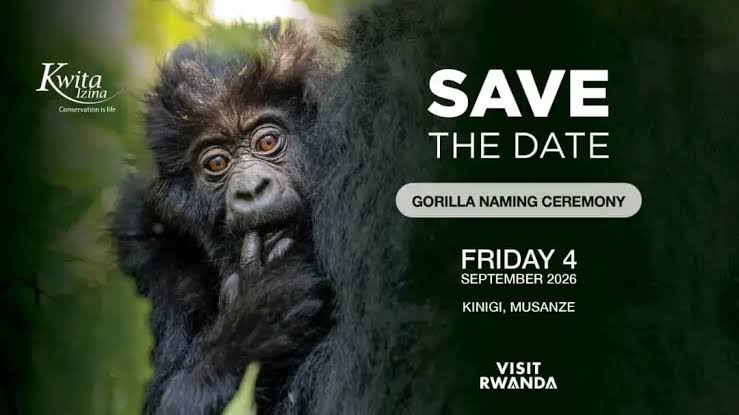
6. The Gorilla Naming Ceremony — Kwita Izina Perhaps the most brilliant piece of conservation communication in Africa is Rwanda’s annual Kwita Izina — the gorilla naming ceremony. Every year newly born mountain gorilla infants are publicly named in a ceremony that brings together Rwandan officials international celebrities conservation scientists and thousands of members of the public.
Kwita Izina — which means “to give a name” in Kinyarwanda — transforms abstract conservation statistics into individual stories. When a baby gorilla is named and its story is shared globally the emotional connection between people worldwide and the gorilla population deepens. Donors increase their giving. Governments increase their commitment. And the gorillas become not a population statistic but a community of named individuals whose lives matter.
Since 2005 Kwita Izina has named over 300 baby gorillas — and has become one of Africa’s most celebrated and most photographed conservation events.
The Akagera Recovery — Big Five Return to Rwanda
The recovery of Akagera National Park is the second great chapter of the Rwanda conservation success story — a Big Five safari park that was devastated by the genocide and then rebuilt from near-zero into one of East Africa’s most exciting wildlife destinations.
From Devastation to Recovery
By the early 2000s Akagera was a shadow of its former self:
- Reduced from 2,500 km² to 1,122 km²
- Lions completely eliminated
- Black rhinos poached to extinction
- Most wildlife populations severely reduced
- Thousands of cattle grazing illegally inside park boundaries
- Poaching widespread and largely unchecked
In 2010 the Rwanda Development Board entered a management partnership with African Parks — one of the world’s most respected conservation management organisations. The transformation has been extraordinary.
The African Parks Partnership
African Parks brought to Akagera:
- Professional park management and anti-poaching systems
- Community engagement programmes for park-edge communities
- Infrastructure investment — roads fences patrol posts
- Wildlife management expertise
- Access to international conservation networks and funding
The results have been remarkable:
2015 — Lions reintroduced Seven lions were flown from South Africa to Akagera in specially designed crates — the first lions in the park in over 20 years. The reintroduction was meticulously planned — the animals were quarantined health-checked and monitored continuously after release.
Today Akagera’s lion population has grown to over 70 individuals across multiple prides. Lions — exterminated from Rwanda within living memory — now raise cubs and hunt buffalo in Akagera’s open savanna. It is a genuinely extraordinary conservation achievement.
2017 and 2019 — Black rhinos reintroduced Eastern black rhinos — one of the world’s most critically endangered large mammals with fewer than 6,000 remaining — were translocated to Akagera in two operations. The first brought 18 individuals from European zoo breeding programmes. The second added more animals to strengthen the genetic base of the new population.
Today Akagera has a small but growing black rhino population — one of the few viable black rhino populations in East Africa. Every sighting of a black rhino in Akagera is a direct testament to the Rwanda conservation success story.
The complete Big Five With the addition of lions and black rhinos to the existing elephants leopards and buffalos Akagera became a fully functioning Big Five ecosystem — the only one in Rwanda and one of the most exciting in East Africa.
Read our complete Akagera National Park guide for everything you need to know about visiting this extraordinary conservation recovery story in person.
The Nyungwe Forest Protection
Nyungwe Forest National Park — Rwanda’s ancient montane rainforest — represents a third dimension of the Rwanda conservation success story: the protection and expansion of one of Africa’s oldest and most biodiverse forest ecosystems.
With over 29 million years of continuous forest existence Nyungwe is one of Africa’s oldest ecosystems — a relict forest that survived the ice ages while other African forests disappeared. Its extraordinary biodiversity — 13 primate species 300+ bird species 1,068 tree species — reflects millions of years of evolution in an undisturbed environment.
Protecting Nyungwe
The key conservation challenges in Nyungwe have been:
- Agricultural encroachment from the forest boundaries
- Illegal logging and charcoal production
- Hunting and snare setting for bushmeat
- Human-wildlife conflict as wildlife moves outside park boundaries
Rwanda’s response has involved:
- Formal national park gazettement in 2004 — giving Nyungwe the full legal protection of national park status
- Buffer zone management — creating transition zones between the park and agricultural land
- Community tourism development — giving communities around Nyungwe income from tourism
- Tree planting programmes — expanding forest cover beyond the current park boundary
The chimpanzee trekking and canopy walkway experiences that now generate significant tourism revenue for the Nyungwe area give local communities a direct economic stake in the forest’s protection — replicating the community partnership model that has been so successful with mountain gorillas in Volcanoes National Park.
Read our complete Nyungwe Forest National Park guide.
Rwanda’s Government Commitment — A National Conservation Vision
A critical and often underappreciated element of the Rwanda conservation success story is the extraordinary commitment of the Rwandan government to conservation as a genuine national priority.
Government Policy and Leadership
Rwanda’s government — under President Kagame’s leadership since 2000 — has made wildlife conservation central to the national development strategy. This is not conservation as a soft optional extra — it is conservation as strategic economic policy.
The logic is compelling: Gorilla trekking tourism generates approximately $400 million per year for Rwanda’s economy — employing tens of thousands of Rwandans in guiding lodges transport and related services. This revenue is sustainable indefinitely as long as the gorillas survive and Rwanda remains safe and accessible.
The government has invested accordingly:
- Professional training for park rangers and guides
- International-standard infrastructure in and around national parks
- Aggressive marketing of Rwanda as a premium wildlife tourism destination
- Policy frameworks that protect wildlife while sharing benefits with communities
- Zero tolerance for poaching at the highest political levels
The Rwanda Development Board
The Rwanda Development Board manages all of Rwanda’s national parks and wildlife resources with a level of professionalism efficiency and investment that is genuinely exceptional by African standards. The RDB’s gorilla permit system — rigorous fair transparent and internationally respected — is a model that conservation organisations worldwide recommend to other gorilla-range countries.
Plastic Bag Ban
Rwanda’s 2008 nationwide ban on plastic bags — one of the most comprehensive in the world — is a small but symbolic indicator of the government’s broader environmental commitment. Arriving in Kigali and seeing a city without plastic bag litter is a striking and immediate reminder that Rwanda takes its environmental commitments seriously.
What Tourists Contribute to the Rwanda Conservation Success Story
Every person who visits Rwanda for gorilla trekking is a direct participant in the Rwanda conservation success story. Here is exactly what your visit contributes:
The $1,500 gorilla permit:
- Approximately 10% ($150) goes directly to community development in park-edge villages
- A significant portion funds anti-poaching ranger salaries and operations
- Revenue funds gorilla health monitoring and veterinary care
- Funds park infrastructure maintenance and improvement
- Contributes to the international credibility and funding that attracts donor support
Your lodge fees:
- Support the employment of local guides drivers rangers and hospitality staff
- Contribute to lodge conservation programmes (many top lodges run their own conservation projects)
- Generate tax revenue for Rwanda’s national budget
Your presence:
- Demonstrates international demand for conservation tourism
- Strengthens Rwanda’s political will to maintain conservation investment
- Creates advocates — every gorilla trekking visitor goes home and tells others about Rwanda’s gorillas increasing awareness and future visitation
The total impact: Rwanda’s gorilla tourism generates approximately $400 million per year for the national economy. Every permit every lodge night every flight into Kigali contributes to a financial ecosystem that makes gorilla conservation not just morally compelling but economically irresistible.
The Lessons of the Rwanda Conservation Success Story
The Rwanda conservation success story has attracted extraordinary international attention from conservation scientists governments and NGOs. What are the lessons that can be applied elsewhere?
Lesson 1 — Economic value protects wildlife The gorilla permit system’s genius is making wildlife worth more alive than dead or displaced. When mountain gorillas generate $400 million per year in tourism revenue they are the most economically productive use of their habitat. Economics aligned with conservation creates sustainable protection.
Lesson 2 — Communities must benefit directly The 10% revenue sharing programme transformed local communities from potential poachers into conservation partners. When people living alongside wildlife receive direct tangible benefits from its protection their relationship with wildlife changes fundamentally.
Lesson 3 — Professional management makes the difference The Rwanda Development Board’s professional management of Volcanoes National Park and African Parks’ management of Akagera demonstrate that world-class results require world-class management. Conservation cannot be managed on the cheap.
Lesson 4 — Government commitment is essential Rwanda’s success is inseparable from genuine top-level government commitment to conservation as national policy. Without that commitment the permit system the revenue sharing and the anti-poaching operations would not function at the level they do.
Lesson 5 — Long-term monitoring is invaluable The Dian Fossey Gorilla Fund’s 50+ years of continuous daily gorilla monitoring — the longest primate study in Africa — has been essential to the population recovery. You cannot manage what you do not monitor.
Lesson 6 — Recovery is possible Perhaps the most important lesson of all. Rwanda’s wildlife was in catastrophic decline. Genocide compounded existing pressures. The situation seemed hopeless. Yet within 30 years mountain gorillas are increasing Akagera has lions and rhinos again and Nyungwe is protected.
Conservation that seems impossible — isn’t.
Visiting Rwanda’s Conservation Story in Person
The Rwanda conservation success story is not just a narrative — it is a living experience available to every visitor:
Gorilla trekking — the most direct participation in the story. Your permit funds the conservation that saved the gorillas. Read our gorilla trekking Rwanda vs Uganda guide.
Akagera National Park — see the lions and black rhinos that conservation brought back from zero. Read our Akagera National Park guide.
Dian Fossey tomb hike — walk to the grave of the woman whose sacrifice started it all. Read our Dian Fossey Rwanda guide.
Dian Fossey Gorilla Fund Museum — the complete conservation story told brilliantly in Musanze. Free entry.
Iby’Iwacu Cultural Village — meet the former poachers who now protect gorillas through tourism. One of the most powerful community conservation stories in Africa.
Kwita Izina — attend the annual gorilla naming ceremony if your visit coincides (usually June). One of Africa’s most extraordinary and most moving conservation events.
Book Your Conservation Safari with Go Safaris Africa
Go Safaris Africa is a Kigali-based safari operator that is part of the Rwanda conservation success story — every gorilla permit we book every safari we operate contributes to the conservation ecosystem that is saving mountain gorillas.
When you travel with us you travel with people who understand and are invested in the conservation story you are visiting.
- 👉 Plan your Rwanda conservation safari
- 👉 View Rwanda safari packages
- 👉 Book your gorilla permit
- 👉 Read our gorilla trekking complete guide
- 👉 Rwanda travel guide 2026
📞 Call or WhatsApp: +250 788 365 595 📧 info@gosafarisafrica.com 🌐 www.gosafarisafrica.com
Frequently Asked Questions: Rwanda conservation success story
What is the Rwanda conservation success story? The Rwanda conservation success story refers to Rwanda’s extraordinary achievement in reversing wildlife decline — growing the mountain gorilla population from ~254 to 1,063 reintroducing lions and black rhinos to Akagera National Park and protecting Nyungwe Forest — making Rwanda one of Africa’s most celebrated conservation models.
How did Rwanda save the mountain gorillas? Through a combination of the gorilla permit system that generates $400 million per year in tourism revenue the Dian Fossey Gorilla Fund’s daily monitoring and veterinary care professional anti-poaching operations and a community revenue sharing programme that makes local people financial beneficiaries of gorilla conservation. Read the full story above.
How many mountain gorillas are there today? Approximately 1,063 mountain gorillas — across the Virunga Range (Rwanda Uganda DRC) and Bwindi Impenetrable Forest (Uganda). Mountain gorillas are the only great ape subspecies whose population is currently increasing.
What is the community revenue sharing programme in Rwanda? 10% of all gorilla trekking permit revenue is allocated to communities surrounding Volcanoes National Park — funding schools health centres water infrastructure and alternative livelihoods. This programme transforms local communities from potential threats into active conservation partners.
How did Akagera National Park recover? Through a 2010 management partnership between the Rwanda Development Board and African Parks — which brought professional management lion reintroduction (2015) and black rhino reintroduction (2017 and 2019) to Akagera. Read our Akagera National Park complete guide.
How does gorilla trekking contribute to conservation? Your $1,500 permit funds anti-poaching ranger patrols gorilla health monitoring community development projects and park infrastructure. Every gorilla trek is a direct financial contribution to the conservation that is saving mountain gorillas from extinction.
What is Kwita Izina? Rwanda’s annual gorilla naming ceremony — a public event where newly born mountain gorilla infants are named. Held annually since 2005 Kwita Izina has named over 300 baby gorillas and is one of Africa’s most celebrated conservation events.
Who is Dian Fossey and why is she important to Rwanda’s conservation story? Dian Fossey was the American researcher who began mountain gorilla research at Karisoke in 1967 and whose work saved gorillas from extinction. Her research the awareness generated by her book Gorillas in the Mist and her fierce anti-poaching campaigns laid the foundation for the conservation success Rwanda has achieved. Read our complete Dian Fossey Rwanda guide.
Go Safaris Africa is a Kigali-based safari operator specialising in gorilla trekking wildlife safaris and tailor-made adventures across Rwanda Uganda Kenya and Tanzania. 📍 Prince House Second Floor Office #5 Kigali Rwanda 📞 +250 788 365 595 | 🌐 www.gosafarisafrica.com